A HUST Team Develops a Robotic Facial Expression Algorithm, Doubling the Degrees of Freedom of Facial Expressions
According to Hubei Daily (reporters Zhang Xin, Ma Guoqing): In the future, robots may understand your heart better than old friends. On January 4, the 2026 Hubei Science and Technology Innovation Conference was successfully held. The achievement “Key Technologies and Applications of Facial Action Perception and Emotion Understanding for Complex Human-Robot Interaction” by the team of Professor Yu Li from the School of Electronic Information and Communications at HUST won the second prize of the Technology Invention Award.
Human facial muscles can produce various expressions, which are an important tool for non-verbal communication. “Joy, anger, sadness, fear, surprise, and disgust are considered basic emotions, but in real situations, different people’s facial structures, muscle habits, and emotional expression styles are inconsistent. Our research goal is to extract the common patterns of emotional expression from individual differences,” explained Professor Yu Li, using the complex emotion “disgust” as an example: in real scenarios, “disgust” is often composed of multiple basic emotions such as “anger” and “aversion.” Most monitoring or interaction systems on the market, upon detecting signals such as “frowning” or “eyelid tightening,” usually directly classify them as “anger.” The algorithm proposed by the team, in addition to identifying strong anger components, can also capture subtle facial movements such as “slight raising of the lower lip,” thereby sensing the hidden “aversion” information, and then making a more accurate comprehensive judgment of the compound emotion “disgust,” achieving an understanding of humans’ deep emotional states.
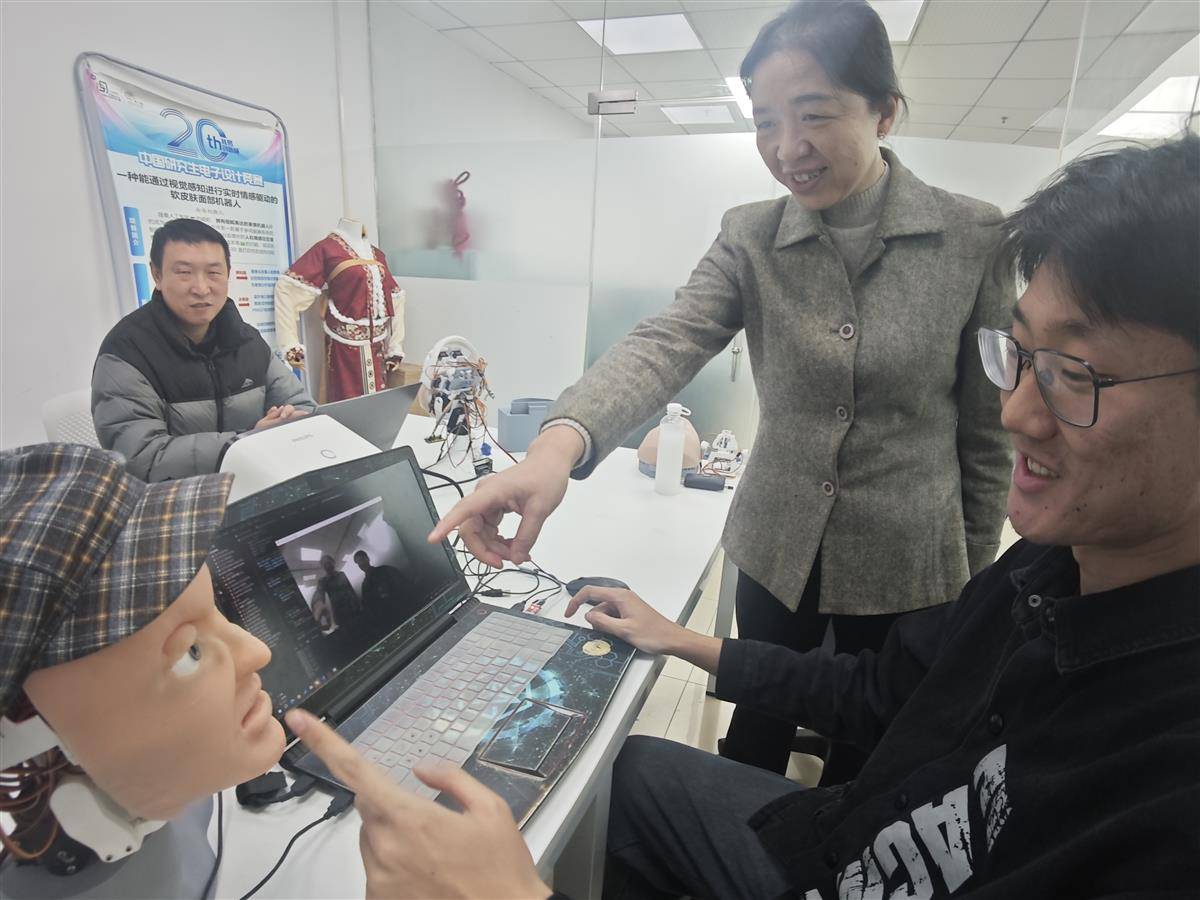
The team has long been engaged in research on artificial intelligence and image processing. Five or six years ago, a cross-disciplinary collaboration opportunity expanded their research direction to facial expression and emotion understanding. The related research integrates multidisciplinary knowledge such as computer vision, affective computing, psychology, neuroscience, and anatomy. Through analysis and feature extraction of various facial expressions, as well as the analysis and modeling of massive face data, the team achieves over 95% accuracy in basic expression recognition tasks, while also possessing the ability to perceive subtle facial changes and micro-expressions. Particularly notably, the team’s innovative algorithm can effectively perceive and understand compound expressions such as fear, surprise, and awe. Even in complex natural environments with lighting changes, partial occlusion, blurred images, and head rotation, the accuracy of compound expression recognition remains above 70%, with relevant performance metrics reaching the international leading level.
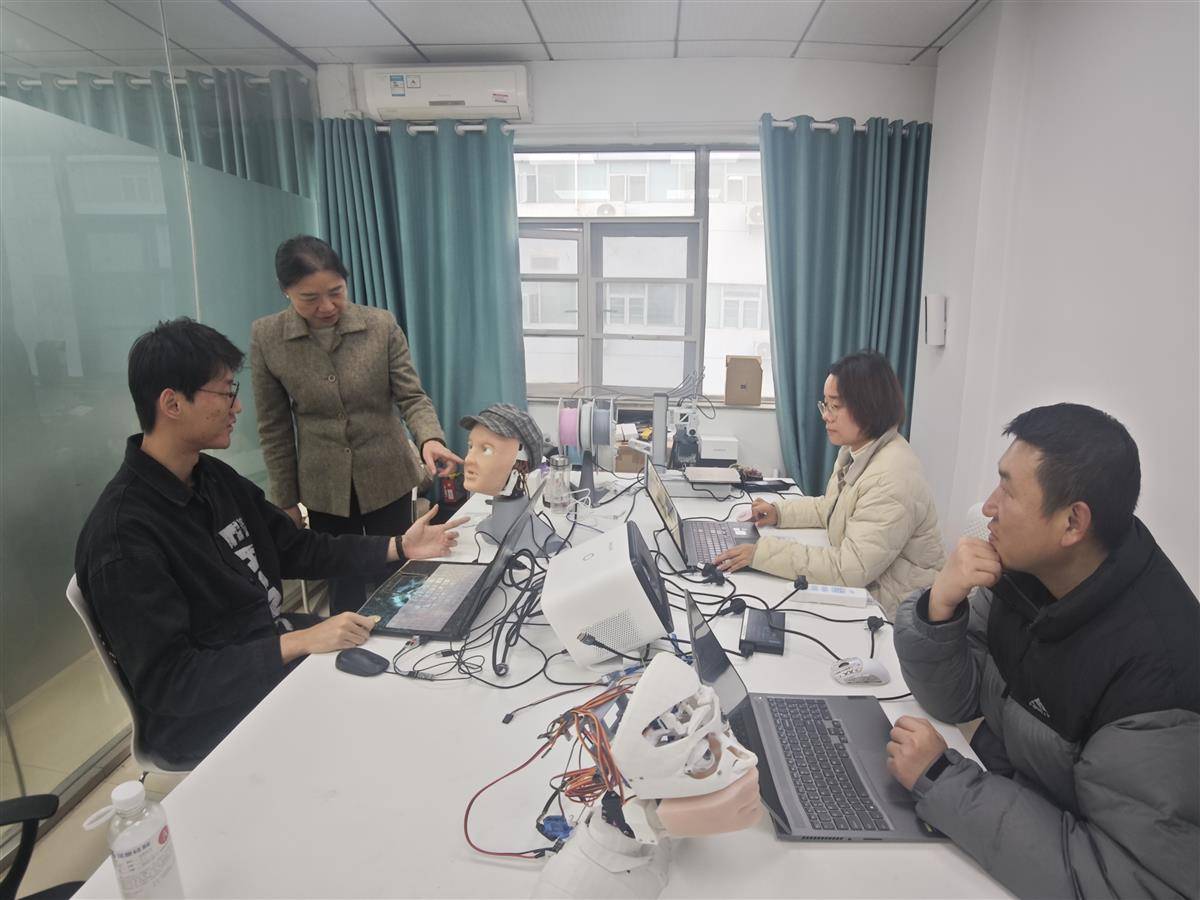
Beyond emotion understanding, the research also emphasizes the naturalness of interaction and the authenticity of expression. In the lab, the team’s Ph.D. and master’s students use 3D printing and silicone materials to build robotic facial structure models. When a subject makes expressions such as smiling, frowning, surprise, or nose wrinkling, the robot face perceives them in real time through the vision system and synchronously generates corresponding facial motion feedback, demonstrating high flexibility and naturalness.
It is reported that the robotic facial structure has gone through multiple rounds of iterative upgrades. Early models had fewer than 10 degrees of freedom and could only perform simple expressions; currently the degrees of freedom have been increased to more than 20. The nose and cheeks can naturally move in coordination with emotional states and speech rate, and the mouth can also complete relatively complex facial motion combinations such as “pouting,” providing a richer physical basis for emotional expression.
“The problem is not whether robots can have emotions, but whether robots lacking emotional interaction capability are truly intelligent,” said Professor Yu Li. The team’s research goal is to enable humanoid robots to go from “looking alike” to “being alike in spirit,” so that they can perceive humans’ complex emotions and make empathetic feedback. Currently, the related technologies have been explored for application in scenarios such as mental-health companionship, elderly health monitoring, and natural human-robot interaction, and hold broad development prospects in the field of humanoid robots in the future.
Original link: https://news.hubeidaily.net/mobile/c_4984058.html